Scaling Research Excellence

RPI faculty members conduct world-class research in fields ranging from quantum and high-performance computing to materials discovery to biotechnology. With a more strategic approach to areas of true institutional strength in research, we can turn RPI’s advantages into powerful opportunities to solve global problems, elevate the Capital Region and the nation, and continue our founding tradition of helping students learn through experimentation.

Organizing Around Historic Strengths In Strategic Clusters

We are organizing our research into six interdisciplinary clusters.
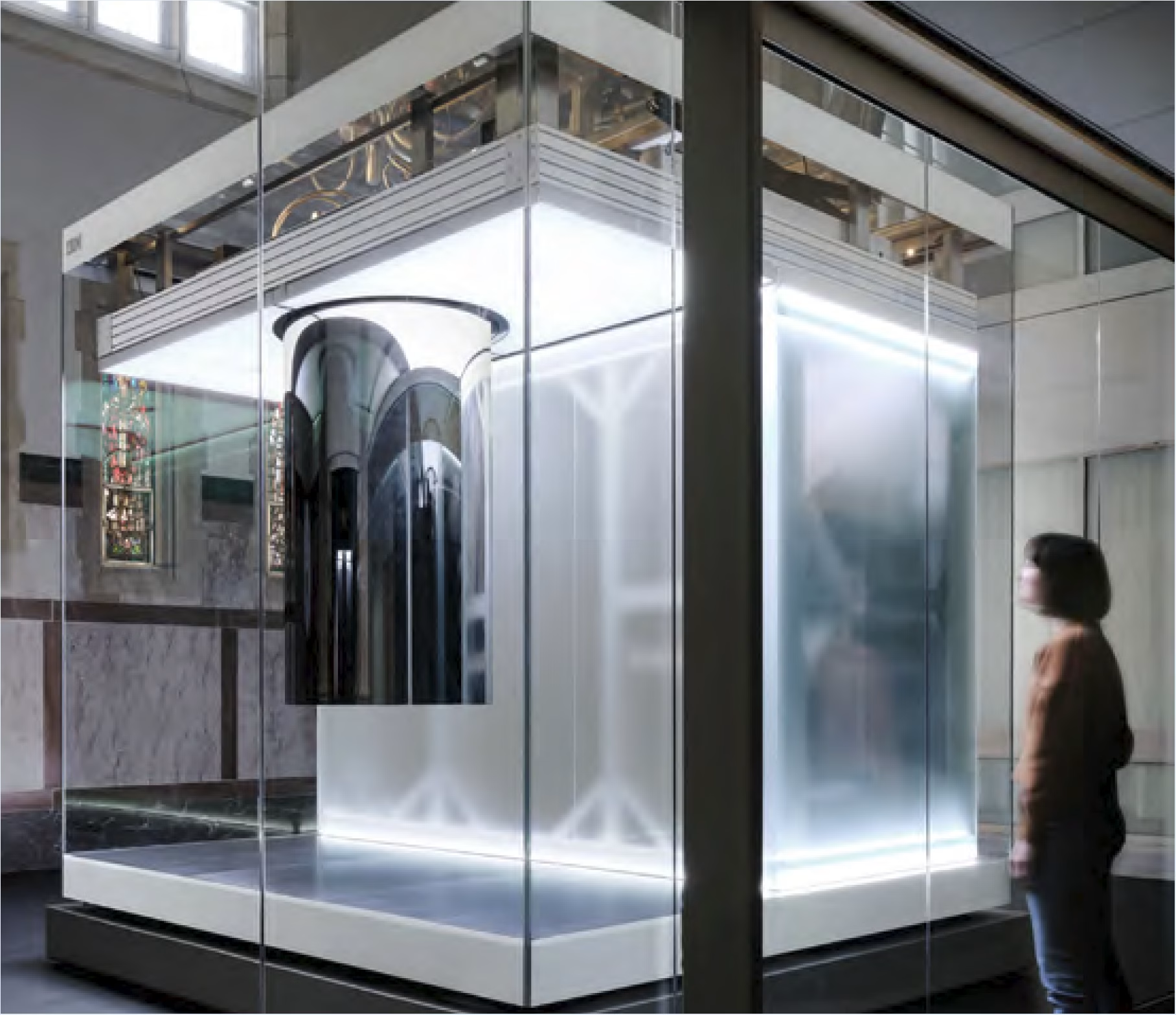
RPI IBM Quantum One Computer

Computation

This cluster recognizes RPI’s tremendous computational assets and the highly distributed use of these resources across many disciplines. The addition of the IBM Quantum System One to campus is particularly important, given that five years from now, quantum computing is likely to be as significant a disrupter as generative artificial intelligence is today. Compared to its peer institutions, RPI has an impressive head start. By creating pathways for our faculty and students to discover the applications of quantum computing and to launch quantum enabled enterprises, we have the potential to turn the Hudson Valley into “Quantum Valley.”

Microchip

CHIPS

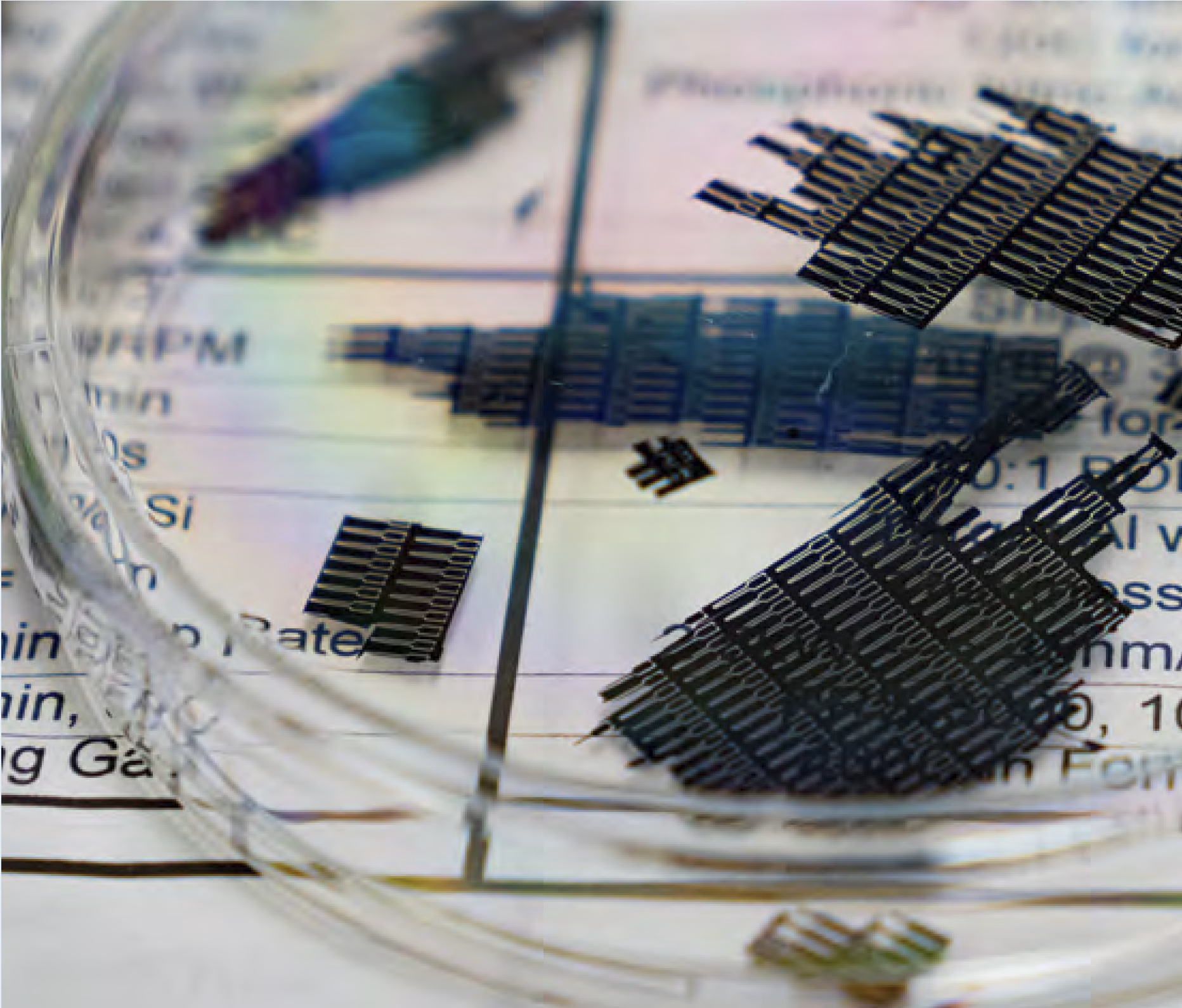
With the $15 billion Albany Nanotech facility in our neighborhood and the passage of the 2022 CHIPS and Science Act, the Capital Region is now the epicenter of a national effort to reshore semiconductor research and manufacturing. RPI has moved fast to organize its CHIPS Cluster and has already secured major government and industry CHIPS Act partnerships. We are working with industry leaders that include Applied CHIPS Cluster Materials, IBM, GlobalFoundries, Micron, and Rapidus to advance their research. We are also creating new educational programs to support the workforce development needs of a growing domestic semiconductor industry.

DFWI Jefferson_Project

Energy and Climate

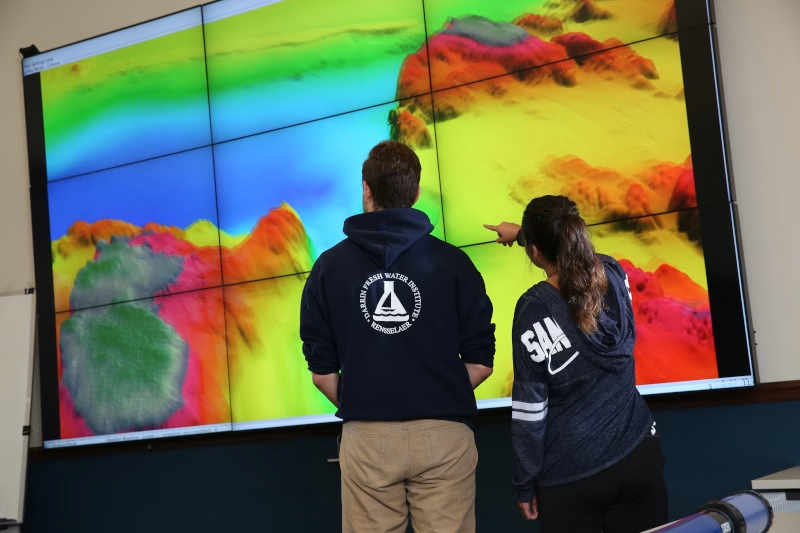
RPI conducts important research in the sustainability of built environments at our Center for Architecture Science and Ecology (CASE), located in Brooklyn. With the Darrin Fresh Water Institute on Lake George, we are a world leader in sustainably managing freshwater ecosystems. Closer to Troy are important efforts in green energy. RPI leads the state supported Center for Future Energy Systems, where we collaborate with industry on fundamental and applied energy research. The Capital Region also has important industry players in green energy, including the research center of GE Vernova that produces green energy technologies. With this cluster RPI is in a position to capture some of the significant investments being made to address future energy, sustainability, and climate needs.

Student Professor Lab

Life Sciences and Biotechnology

This cluster leverages important RPI assets that include the Shirley Ann Jackson, Ph.D. Center for Biotechnology and Interdisciplinary Studies (CBIS) and our newly formed Center for Engineering and Precision Medicine (CEPM) in New York City, a partnership with the Icahn School of Medicine at Mount Sinai. We also benefit from a biomanufacturing cluster in the region, including the biotech company Regeneron, which does all its domestic production in Rensselaer County, and the RPI startup Ecovative, which produces meat alternatives and performance materials

RPI Students in the MILL

Materials and Manufacturing

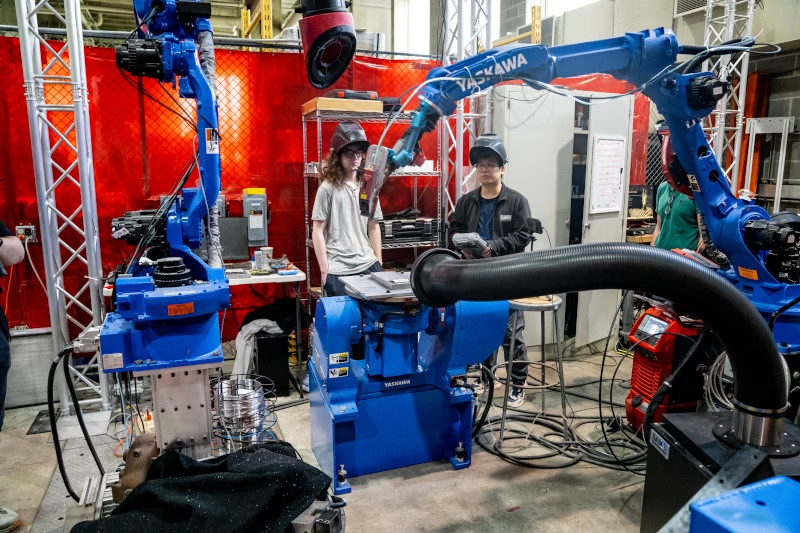
At our Center for Materials, Devices, and Integrated Systems (CMDIS), RPI research spans many fields, including biomaterials, sustainable materials for the built environment, and energy-related materials. RPI has historic strengths in materials discovery, including important work in computer modeling to predict material properties, a field that is likely to be transformed by quantum computing. RPI also leads a new Fashion Innovation Center, a consortium that explores new fibers, materials, and manufacturing technologies with the goal of fostering a sustainable fashion industry in New York State.

Student with Telescope

Fundamental Knowledge

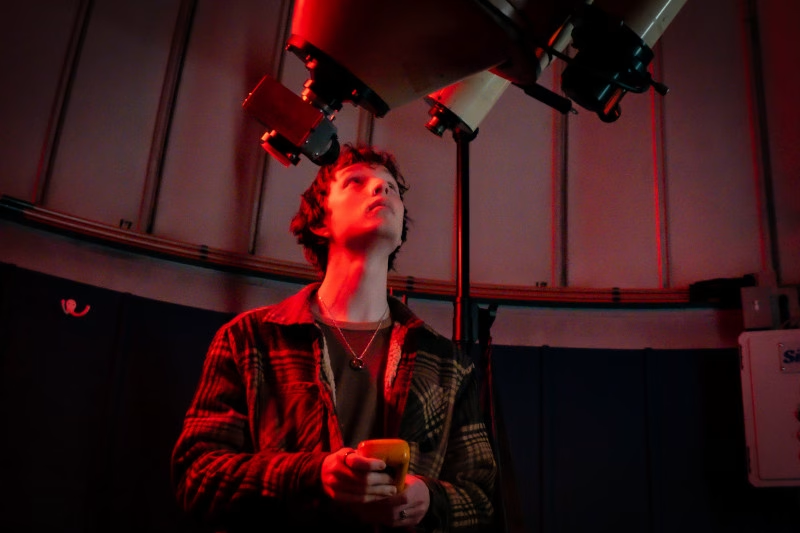
This last cluster acknowledges the power of curiosity-driven research in our community—and the fact that such blue-sky research often has unexpected spillovers and applications.

Aligning Faculty Hiring
With Research Priorities

RPI must make strategic hires for both senior and junior faculty positions that align with our research and academic priorities. We intend to grow back to our historic number of 350 tenured and tenure track professors and have already made more than 40 hires toward that goal. To attract world-class scientists, engineers, architects, and scholars, we plan to offer competitive start-up packages to our new faculty and ensure that we have excellent infrastructure and leading-edge tools for them to work with.

Empowering Graduate Research
Through Robust Fellowships and Funding

To expand our research portfolio, RPI needs to attract more Ph.D. students and postdoctoral researchers, who contribute so much to our efforts in research. We must increase funding and support for them—as well as support our undergraduates who want to pursue research. To expand innovative instruction and the growth of the research enterprise, we aim to increase the number of endowed tenure-track positions, add newly created teaching-track positions, grow the number of graduate students engaged in research labs, and create funds to support newly hired faculty in our key research areas.